
only 20 places !
At Beglika 2026 there is an opportunity for free spirits:
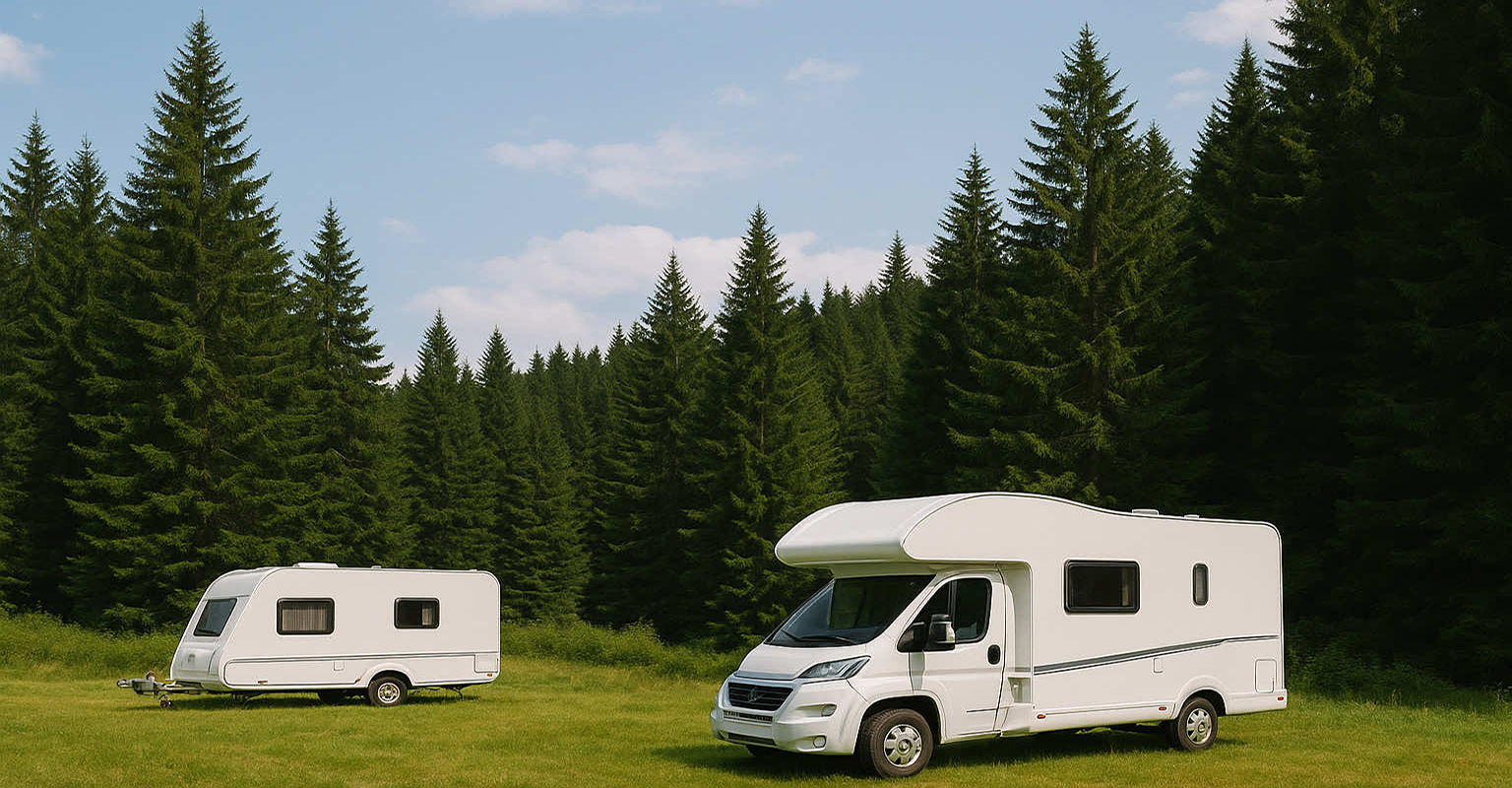
a special area for campers and caravans – in the middle of nature, but with the comfort of your own home on wheels.
If you like waking up with the sunrise, being close to everything, but also in peace – this is for you.
Notice that the zone is in a different location, because the water level in the dom is much higher than last year.
What we offer
- Limited places near the festival area (about 900 meters from the entrance)
- Space, silence and views of the forest
- Toilets and water nearby – within 100 meters
- Price: 80 € / 156 BGN per caravan/camper for the entire period*
*If you do not wish to have a reserved spot in the specially designated “Campers and Caravans” area, but to leave your vehicle in one of the parking lots or in another place you find – you are free to do so, as long as it is not on the narrow dirt road within a radius of 1 kilometer from the festival entrance.
important
The location is different than the last year, because of the level of the water.
Prepare with:
Water tanks
Warm shoes and headlamps
Backup power / solar panels

Beglika and the family of the mysterious capercaillie
The Beglika area, nestled at an altitude of 1,500 m in the majestic Western Rhodopes, is known for many things.
The “Beglika” and “Mantarica” biosphere reserves stretch here, along with the protected areas of “Sluncheva Polyana”, “Chatama”, “Batlaboaz” and “Toshkov Chark”. The area is rich in natural treasures – nearly 120 medicinal plants and coniferous forests, whose age reaches a respectable 200 years, and its name has remained from Ottoman times, when the Yuruk-shepherds gathered here once a year to hand over to the authorities the beglik tax due for their livestock.
Beglika is also home to one of the most mysterious inhabitants of the Rhodopes – the capercaillie. Also known as the “wild rooster”, its mystical song can only be heard in the spring, when it performs its mating ritual. This bird, a symbol of the Begliche community, is strongly attached to its home — the forests that shelter its “family hearth” generation after generation.